 In the increasingly difficult competition to get published, writers know they must put their best foot forward by sending out only a professional, polished, and persuasive new proposal or manuscript to any prospective literary agent or publisher.
Many authors have come to understand the value of objective help before taking the plunge, and I don’t mean from family, friends, or the local writing group. Such support is valuable to have close at hand, but even with the best of intentions, it’s not as useful as professional feedback and guidance.
Full disclosure: I’m an Executive Editor at Jossey-Bass/John Wiley & Sons and I also work privately as a developmental editor with selected authors. But I’m not the only such practitioner, and not necessarily the best one for you. There are plenty of other developmental editors out there.
Ask for referrals from authors you know and from agents and editors you meet at writers conferences, expos, or book store signings. It takes hustle and discernment. In case you feel you are short on time for this hustle, you can hire an editor from platforms like Fiverr or Upwork, for which the Upwork vs Fiverr comparison might prove helpful. This overview would give you the pros and cons of both these websites and you can decide which one to approach for finding your editor.
Some independent editors have websites that list their services and former clients. If authors are listed, you can try to get in touch with them through their agent or publisher. The authors may be happy to endorse their editors and may well want to lend a helping hand to a fellow writer.
Be very careful when evaluating and making a final choice. Here are some of the primary considerations I think are important when selecting an editor.
.
Evaluating a freelance editor
• Professional Status
Is this individual a developmental editor? A developmental editor works with a writer to improve the basic concept of the book, the way it’s focused and structured, the style and attitude of the narrative voice, whether it’s fiction or non-fiction.
In a non-fiction book they’ll help clarify and organize the ideas and information. In a novel, they’ll work on the plot, characterizations, dialogue, visual description, and literary style.
It’s important to distinguish developmental editors from copy editors, who take a manuscript that has already been developed and correct the spelling, grammar, punctuation, and in some cases fact-checking.
Ask about the editor’s educational background and experience. A developmental editor is likely to have a vitae that includes a degree and perhaps graduate studies in literature or a related subject.
It’s also very helpful to have in-depth experience as an editor working with a broad variety of authors in real-world commercial book publishing.
• Track Record
Has the editor worked on books that have been published successfully? Your prospective editor should be able to provide an author list of published titles that you can examine.
Be sure that the editor you’re considering has a breadth of experience working specifically with books and not primarily short-form magazine-length pieces. There are important differences in the skills and techniques necessary for the development of a book-length story and plot structure, voice, narrative arc, and pacing throughout. This is true both in fiction and narrative non-fiction works.
Ask the editor to provide references and endorsements, and be sure to follow up.
• Compatibility
Don’t be shy. Get in touch with a prospective editor directly. If you live nearby, make an effort to meet. If that’s not feasible, have a good phone conversation. It’s important to see how they respond and to hear their voice, to establish a relationship you can trust and enjoy.
You don’t have to love your editor but it helps to like one another and have an open, honest channel of continuing communication. A good fit is important.
Humor and compassion also go a long way in forging a productive relationship!
• Accessibility
If your candidate is slow to answer emails or never returns your phone calls, that’s a bad sign, a harbinger of future problems. Being busy is normal; being absent or invisible for long periods of time is not acceptable.
.
Remember: It’s your book
Once you’ve narrowed your search or made an actual choice, I always advise authors to establish the ground rules up front and take an ongoing proactive role in protecting their interests.
Good developmental editors subsume their own egos and enter the world of the writer’s consciousness. They’re not writing their own book but helping you create the book you want to write.
A good professional should never take over a book, conform or contort it to their way of writing, or make any changes unilaterally or without your approval. That’s why the tracked changes tool on your Word document manuscript is so useful. You can see everything in the original with any edits, deletions, or additions, highlighted in another color in a way that can be either accepted or rejected.
Establish clear financial terms
Some independent editors have a written contract, and others don’t, preferring to operate on a basis of trust. In any case, you will want to agree on a minimum and maximum fee, and how payment will be made.
Most developmental editors charge either an hourly rate or a flat fee depending on the length of the book and how much work is needed. Not inexpensive, to be sure, so consider how much this kind of investment is worth to you, and choose very carefully.
Also be clear about your ability to follow up with more questions, brainstorming and feedback on subsequent revisions. Is that part of the original estimate or an additional charge?
Agree on an exit plan
Before you start, agree about how you can stop in the middle and leave the deal without rancor.
This rarely happens, but if a major problem develops over communication or work in progress that just can’t be solved, it should be discussed in writing so there’s a clear record and no misunderstanding — even if there’s no formal contract.
Maxwell Perkins: A role model for editors
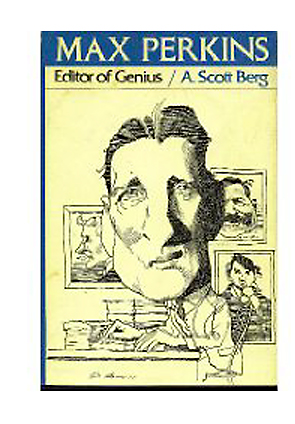 Maxwell Perkins may be familiar to students of American literature as the legendary editor at Charles Scribner’s Sons (now a division of Simon & Schuster) who during the 1920’s and 30’s worked with Ernest Hemingway, F. Scott Fitzgerald, Thomas Wolfe, Erskine Caldwell, and other famous authors.
Perkins was well known for his intelligence, humility, passion for good writing and unconditional support for the writers he edited.
He maintained close personal relationships with his authors, nursing the alcoholic Fitzgerald through vast improvements in The Great Gatsby. He advocated the then revolutionary publication of Hemingway’s The Sun Also Rises. He suffered through two years of persuading Wolfe to cut 90,000 words from his first novel Look Homeward Angel.
Here’s a passage from one of many letters Perkins wrote Thomas Wolfe in 1937 during a period when they were struggling over the length of Wolfe’s second novel Of Time and the River:
My impression was that you asked my help, that you wanted it. And it is my impression too that changes were not forced on you (you’re not very forceable, Tom, nor I very forceful), but were argued over, often for hours. But…unless you want help it will certainly not be thrust upon you…I believe the writer, anyway, should always be the final judge. I have always held to that position…The book belongs to the author.
Given the success of Perkins’ work with Wolfe, this window into their professional process shows just how sensitive and complex a relationship this can be.
Any experiences with editors to share?
Every successful writer I know has a relationship with an editor they trust. But it doesn’t always happen easily, or the first time around. We’re interested in hearing about your own experiences finding and working with an editor, and the impact on your writing and getting published. And if you have any questions about all this, fire away in comments.
Mr. Rinzler, I have noticed that your last query was in 2016 so I do not know if you are still taking questions. However, I decided that if you never answer, at least I tried! I am interested in becoming a professional developmental editor. I’ve proofread and acted as a copy-editor along with helping out in the development as an amateur for a few authors, but would like to actually go full time with this work and use it as a source of steadier income. Do you have any suggestions as to how to go about doing this? Classes, working with an existing company, or other resources I do not know at this time. I would appreciate any information you feel you can share.
I have gone from one to another and my short psychology project still unfinished.
I am not a native speaker, an ideas person with visual insights and so it has taken 3 years to complete something that others would have completed in months. I am very clear my content is unique and insightful, so some people say.
I am here desperate for a good editor to finish this off, I have been to about 5 different people already. The product is ready to be cut by the right editor, where to from here, help please?
I have a visual person and I have graphics that need to be inserted and content indexed, the project is an ebook and is only 50 or so pages.
I am quite lost, I have approached commercial editing companies but is like 200 a pot and it looks like they want things to linger and I am finding it really tiring to dispute their little input and rudeness.
I am not the sensitive type… I promise.. no actually I am … I lie. I am just tired.
Email me if you suggest a cleaver editor that will be able to grasp new concepts.
Thankful
Miguel
Hello Miguel,
Sorry you’re having such frustrating experience. Some people can be rude when they’re in a hurry. I’d recommend that you find someone to help you navigate this process who has stronger skills in English then you do.
This person might also be able to polish up the translation for a reasonable fee, since it sounds like you need a copy-editor and indexer, not a more expensive developmental editor. Good luck and best wishes.
I’m near the end of my mystery/crime novel and your words are pieces of gold to me, Alan. I am so grateful for experts like you who share their knowledge. I thank you so much as I’m almost ready to hire an editor. My self-editing is almost over-the-top at this point, I’ve done so much of it. I will certainly be returning to your website in the future.
When you’re editing someone’s manuscript and it’s bunk–really bad. How do you keep yourself from “taking it over” as you put it your article?
I deal with a lot of new and aspiring writers that have many core developmental flaws and inconsistencies …
This is a great post. I’m not sure if you are still accepting questions, but I’m looking into hiring a developmental editor and have done a sample edit. I thought developmental editing was looking at the book on a larger level, but I’ve run into a lot of stuff about developmental line-editing. When I got a sample edit, the in-line developmental editing was not helpful or what I wanted.
I kind of want to tell the next editor that I’m not considering in-line developmental editing but just want the larger picture on character and structure etc.; however, I’m afraid if by doing that I’m setting myself up for failure in some way? Or does developmental editing have to be in-line editing?
Thanks for your time and advice. Love your blog.
Janet,
A developmental editor is exactly what you’re looking for, since an experienced professional can help with the content, organization, and style required for a winning proposal. I frequently work on proposals with an author, sending iterations of the working manuscript back and forth as email attachments. Consequently, I do in fact edit the proposal, since the brain-storming, board sounding, and task mastering is done quite efficiently in this customary process.
Hi Alan,
I loved your article.
I’m in the proposal stage of writing a non-fiction self-help book and I’m coming up against some road blocks.
The good news: I have an amazing lit. agent, strong, well-developed content, a very specific tone/voice, writing experience, a bunch of solid research, and an insatiable passion for my topic, for which I would call myself, an expert (wow, my low self-esteem is shaking in it’s shoes right now).
The bad news: I am a book proposal writing virgin, and am weak in areas such as; organizing the work, setting and meeting goals/deadlines, keeping the momentum/move things forward, and staying on task and focused (I have so much to say about my topic that I often veer off in a direction that doesn’t serve the proposal.). In addition to these kinds of “managerial” issues, I am also in need of professional and constructive feedback, along with support and encouragement. I also need someone who has experience crafting self-help book proposals, that kind that have led to publishing deals. Ideally, this person would be a highly skilled writer, a psychologically savvy editor, and an inspiring, passionate cheerleader.
However, this person would not be doing any actual writing or any research and most likely would not be taking material home to edit and hand back to me. I need to work with closely with someone, have them check in with me often, be a sounding board, brainstormer and task master. But I cannot seem to nail down who this person is (their title, I mean) that I am looking for. Am I in need of a developmental editor? Or is there another kind of professional that would be better suited for my needs?
Thanks in advance for your input on this.
Thank you Alan for your insight and advice. I was fortunate enough, several years ago, to encounter Dick Margulis, http://www.ampersandvirgule.com/ and to retain his services as editor for my writing. Throughout the process Dick maintained the highest standards of the profession and also disabused me of many misconceptions regarding the publishing industry. Dick is a careful craftsman and I regard him highly. J.Dwyer, writing as Raymond Terry
For me the role of a developmental editor was crucial to the successful completion of my manuscript. As a travel journalist I had written a travel narrative as I journeyed alone around Myanmar. A Sydney publisher was mildly interested, but suggested the manuscript was almost, but not quite, a memoir. She recommended Alan Rinzler (yes, the very same) who agreed to take me on.
Alan has been a tower of strength and inspiration and I am grateful that he wants to remain in touch, even though he has finished his page by page edit and has given me all his suggestions.
Alan helped me to uncover and link two parallel journeys: my geographical one around Myanmar and my inner journey as I struggled to recover from the death of my husband Richard. Recovery (though I suspect it is never complete) has taken several years and has come in a completely unexpected way. Chapter 20 of ‘Myanmar: a Memoir of Loss and Recovery’ is called Three Strands of Happiness and it is one of those strands that has helped me and through me helped many women in Myanmar.
Hi Alan:
Very helpful article. Thank you.
You say several times that it’s best for a developmental editor to be involved in the process as early as possible. How would this work with a partner?
Britt
Hi Claude,
I’m sorry you had so much trouble with transforming your book into a YA trilogy. As you point out, that’s exactly the kind of problem you can avoid by working with a good developmental editor very early in the creative process.
Oh, how I wish I had come across your post before publishing on the Kindle the translation (that I did myself) of a book I first published in Italy and in Italian. You have no idea of the agonies I went through! A “developmental” editor would have been just the thing – particularly as I brought massive structural changes to the ms, turning it into a YA trilogy, moving from a central character who was a 33 years old Italian to one who is American and 17…As a result, Fear of the Past (the title of my trilogy) took me TWICE as long to produce – at least, to get it up to a level where I felt reasonably satisfied with it.
Because there’s no doubt about it: the book is ultimately the author’s, but an editor can SAVE so much time!
Well, another time… and in any case, thank you for the excellent advice.
Alan, your advice or words of wisdom are timeless.
Hi Vania,
Sounds like you need some professional feedback for both your proposal and the novel itself. I don’t know a great deal about the book business in India, but I’m sure you could benefit from consulting an objective developmental editor to polish your proposal and possibly improve your manuscript with revisions of the core concept, structure, and literary style.
This kind of evaluation and revision is essential these days, when agents and publishers move so quickly to dismiss incomplete or otherwise imperfect work in a highly competitive marketplace.
Good luck!
dear Alan,
I have written this literary fiction, titled – ‘The Eternal Horizons.’
I have been wondering from where to take a first lead in the direction of its publishing.I have completed the manuscript but have not got it professionally edited so far. I have composed a synopsis entailing the overview but perhaps I guess I am not able to sum it some reasonably well or at least I am not content with the outcome.
I am a new writer and has absolutely no clue about this whole process of getting a literary agent and getting to a publishing house and perhaps in India there’s not much provision for that either.
As a wrote that I am a budding writer, it doesn’t mean I am new to writing as whole as you can find out from my work if you wish.
I would be glad if you can enlighten me on this.
Wow! Much to think about. Thanks for the information.
Hi Lynne,
It’s always best to have a clear understanding of whether you are getting real developmental editing or just copy-editing, and to have an agreement before you begin regarding the exact hourly rate and estimate of time to be spent. From the rate (too low for a developmental editor,) the lack of response, and general ambiguity of what you describe, this sounds like a situation where you might be better off to cancel and look elsewhere.
Good luck,
Alan
I submitted a 300 page memoir to a local freelance writer who said she’d probably charge $35-$45 hourly. I asked in a follow up letter which amount she’d decided upon but received no response. After 2 weeks she has not finished reading the large print double spaced memoir through to the end.A good friend recommended her to me so I’m reluctant to ask again if she can give me her hourly rate and the approximate amount of time she expects to spend on editing.
I’ve asked if she has a relationship with an agent that has connections to a large publishing firm since she was highly enthusiastic about this memoir being highly successful and having a broad appeal. I don’t really know if she is a copy editor or a developmental editor, although comments about an addition I sent her suggest that she is looking at the the anecdote in terms of whether or not it fits in with the objective of the book.
Would a good editor expect to answer these questions for a client?
Dear Mr. Rinzler,
I’ve just begun the process of learning how to try to get published. Your site and Nathan Bransford’s site have been enormously informative. I signed right up for Publisher’s Marketplace, on your advice. Again, useful site.
Your comments about how publishing has changed since Maxwell Perkin’s time put much into perspective for me, since I’ve been so fixated on how things “used to” work as he did them. I had the opportunity to copyedit/edit/design Maxwell Perkin’s letters to his daughters, when the ms was in Godine’s hands, and I always perk up when his name is mentioned. One of my childhood dreams was to be somewhere in his orb. That was the closest I got–lunch with one of his daughters and hours and hours on the ms–and no pay. (Godine didn’t end up publishing this book; someone else did.) Ah, so my old dream is now truly a dream. Your site helps me figure out how to keep dreaming in the right direction.
Thank you.
Hi Brian,
If you’re submitting the work to an agent or publisher, you don’t have to hire a copy editor, since that kind of final technical edit falls under the domain of the publisher. Publishers always employ their own copy editors to go over a manuscript very carefully if they decide to publish the book.
If you are self-publishing, I would advise both types of editing. Developmental editing for concept, structure, clarity and literary style, and separate copy editing for the final pre-publication technical read to correct any mistakes of spelling, punctuation, and other details.
So you are not responsible for delivering a copy edited manuscript when submitting to an agent or publisher, only a fully developed manuscript on a literary level, to the best of your ability, with or without the benefits of a free-lance developmental editor. I do recommend you run it through a spell-check, and go over it very carefully yourself, since typos can be embarrassing!
-Alan
Thanks Alan — great advice. I’m in the process of securing a freelance editor to work on my manuscript. I wasn’t sure what I needed, but I think I’ve decided to hire a developmental editor, incorporate her feedback, then hire a copy editor. Do you recommend both steps (if one can afford it)?
This is extrememly helpful. Thank you. I’ll flag this post and return to it as the need arises.
Hi Jon-
Maxwell Perkins was a staff editor at Scribners whose job it was to both acquire and develop books. He wasn’t assigned anyone but rather sought out and signed up the authors he published, just as acquiring editors for big commercial publishing houses do today. In the case of Hemingway, Perkins read his short stories at the suggestion of F. Scott Fitzgerald.
You’re right, though, commercial agents and publishers today are not ordinarily willing or able to do extensive editorial development and expect to see proposals that are ready to complete or manuscripts ready to put into production. Writers do not, however, pay for any costs of development or production once they have a deal, then or now.
Your choice as a writer is whether or not to invest up front in a developmental editor to work page by page on the kind of revision that a good freelancer can provide. Smart writers get professional evaluation and when necessary, detailed, specific suggestions for revision. It’s just a matter of how and when to get it, and my advice is the earlier the better.
-Alan
Thanks, Alan. As always, a very clear and informative post.
I am curious if this is the kind of editing that publishers used to provide and have now cut back on. In your Perkins example, did Hemingway, Fitzgerald, and Wolfe hire Perkins, or did Perkins get assigned to them once they were under contract with Scribner? Didn’t this used to be part of the whole publication deal?
I understand that manuscripts have to be well polished to have a chance getting a look from an agent, and that every manuscript would likely benefit from this type of edit. But now it seems the cost is being front loaded onto the author without the warm fuzzy of knowing he’s got a deal. Or has it always been like this? Either way I think the author would pay the cost, out of the proceeds formerly (but with the warm fuzzy) and up front now. Correct me if I’m wrong.
Just looking for some historical perspective.
~jon
Hi Pam-
Some developmental editors do focus on a particular genre, but I think a good editor can work on any project as long as he or she believes it really has promise, knows how to fix it, and is willing to take the time to go page-by-page with specific detailed corrections and instructions for revision.
I don’t personally specialize in any genre when working as a free-lance developmental editor, but instead always ask to see the work-in-progress, whether it be an outline or draft manuscript, and see if I can be useful.
As a writer trying to figure out which one to choose, you have to research the track-record of a potential editor, get in touch — speak on the phone or meet in person if you can — and consider what words pass between you. Get an estimate of cost…then take a leap of faith, which can always be checked and evaluated along the way.
-Alan
Alan:
I wonder whether it’s important to choose a developmental editor that specializes in the genre in which you are working. For example, would it be pointless to have a romantic comedy edited by someone who’s good at mysteries or biographies? Also, people have such different preferences and likes/dislikes, is it a consideration that one editor might like your writing style and another might have a problem with your style? How would you know which one to listen to? So many questions . . . .
Your article on selecting an editor was very informative, and it will start me on a path to find a good editor. Thanks for taking the time to post that.
Pam
Alan,
Thanks for your input!
Bonnie
Yes, the earlier in the process of writing a novel I can work with a writer the better. There are many important decisions to be made regarding point of view, narrative voice, characterizations, story and plot structure, and literary style. It’s better to get those elements straight before going too far downn any road or making any wrong turns.
As a develpmental editor the material I work with is not finished. So I much prefer to start with the early ideas, short story or draft sketches in preparation.
Thanks Alan.
Also, do you ever work with an author from an idea or a short story or sketch towards a novel or do you prefer there to be more material that looks like finished product?
Hi uw,
When I work with an author, my initial fee includes the tracked fully edited manuscript plus a cover letter detailing problems and solutions. The initial fee also includes an hour follow-up consultation, and short emails and phone calls.
After that, the author may retain my services to continue editing revisions on an hourly fee basis until the book is finished.
Alan
Hi Bonnie,
If the freelance developmental editor is willing to be auditioned for a fee and within a time limit to be agreed, and then you’re happy with that collaboration, by all means go ahead and work together on the full manuscript.
A review of only the first 30 pages, however, won’t have the benefit of the developmental editor’s analysis of the whole work. So that initial evaluation could change.
Alan
Alan, on your blog, you have a number of examples of working with known authors who you developed a friendship relationship with. Is this how you work with all authors?
You speak of months of back and forth on edits and writer rewrites that may occur. Do you typically stay with a hired arrangement that close (i.e., through to the finished product and/or reading the rewrites) or is it a one pass through and that’s the end of the contact?
I think for a lot of new writers especially, how the editor-writer relationship is supposed to play out is very vague.Writers do not know what to expect.For example, editors vary greatly in their descriptions or lack thereof of that process, especially with unknown writers looking to polish up their WIPs.
Can you shed some light on how you work with new/unknown clients.
Thanks.
I worked with the wife of a Pulitzer Prize nominee whom I had already studied writing with for a week. He was fantastic and taught me how to create drama and tension. When I hired his wife, I was very naive. I thought I was hiring a developmental editor; she turned out to be hardly more than a copy editor. As a professional journalist for several decades myself, that was not what I needed.
I would add that in any initial agreement, writers should set a time limit for completion. This “editor” left me hanging for several months with little input. I take full blame for not having set a completion target date.
My manuscript has been revised and is much improved, thanks to a lot of hard work. I’m considering hiring another editor, at least to review my query letter and first thirty pages. If, at that point we are both happy with our working relationship, I will ask them to consider working on my entire manuscript. Is that a reasonable request?
I don’t always leave a comment, but I appreciate the advice on your blog.
Thanks,
Bonnie
Thanks for this — Excellent advice. I’m coming up to the point with my manuscript where I’ll decide whether to hire an editor — now I know to look for a developmental one!
What’s the going rate for this type of editing?
Thanks!
And then some of us are lucky enough to have a genius developmental editor as our publishing editor. Not that I’m bragging or anything.
Having worked with a respected editor over the past several months, I can say that these points all make sense.
An unusually nice agent who actually called me in rejecting a query and partial submission gave me the name of this editor and one other. I read both web sites and didn’t think the other would be a fit at all.
I didn’t have the primer in this blog post to start. However, what’s covered here has rung true in the relationship. If my book ends up getting published, my editor will deserve tremendous credit, which I will gladly bestow. I also do think his name has been a boost in attracting the attention of agents who’ve recently requested to see my work.
With future book concepts I plan to work with him pro-actively in developmental discussions, rather than to begin after a draft is written.
For me it has been a worthwhile investment in what I hope will be a published novel. I recognize that there are no guarantees–ever–but there are paths to enhancing your chances, especially if you’re an unknown quantity. At the very least, working with this editor has given me insight into the book development process that has been a fantastic learning experience through a relationship characterized by humor, compassion, and open communication.
As an acquisitions editor, I frequently receive manuscripts that the author or agent inform me have been professionally edited or co-authored by a hired writer. I feel that such an investment demonstrates a level of commitment.
But what ultimately counts for me is the quality of what’s on the page, first and foremost. And if the editor or co-writer is someone I know, the name may in fact help get my attention.
As for Harlequin, I’m not personally familiar with their editorial services, but a quick glance at their website indicates that they’re offering writers a general critique in the form of a short summary — not a page-by-page comprehensive developmental edit. There’s a world of difference.
If you’re asked whether you’ve worked with an editor, tell the truth, because honesty is fundamental to a good author/publisher relationship.
I’ve read agent blogs that say not to bother mentioning, in a query, that your manuscript has been professionally edited because they’ll have no idea if it was done by a reputable editor or not. What if it was done by a well known group, such as Harlequin? Should the fact that it has been edited and revised be mentioned? Should the editing company’s name be mentioned, esp. if your targeted line is in that company?